Conferences and summits

Live interpretation for conferences and summits in the UAE

SIM.AI gives every delegate at a conference or summit live interpretation and captions on their own phone, in up to 12 languages at the same time from one audio feed. There are no booths to build and no receivers to count out. The Sim Trans team runs each session from one discreet position at the side of the hall.

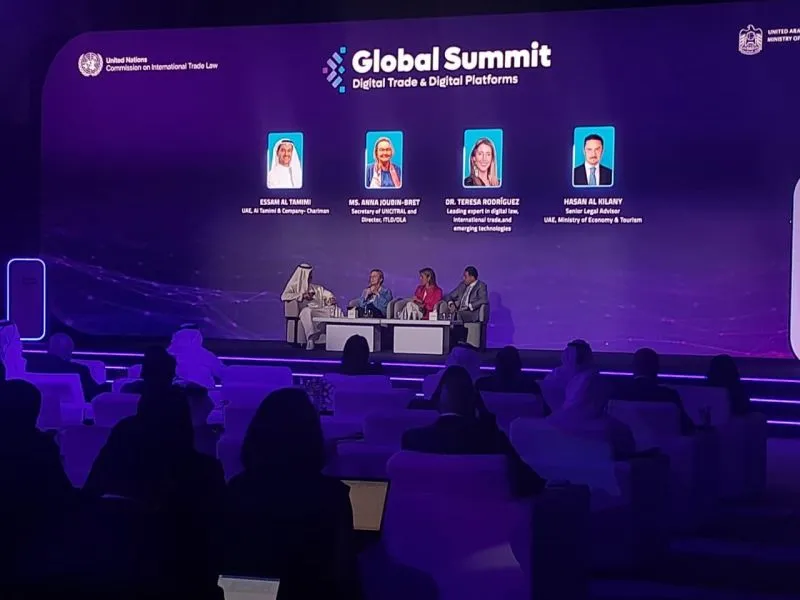
A four-person panel on stage in front of a large screen at a summit on digital trade in Dubai, audience in the foreground.
A summit panel on digital trade in Dubai, December 2025, interpreted by Sim Trans.

What matters most

No delegate loses the thread

A conference programme moves quickly: keynote, panel, floor questions, then three breakouts at once. What matters is that nobody drops out of the conversation because of language, and that speaker names, titles and sponsor terms come out the same way in every channel from the first session to the last. That depends on a clean feed from the sound desk, a glossary built from the programme, and someone watching every channel all day.

Typical sessions

Where we work in this sector.

  • Opening keynote and plenary

    Ministers, chairs and keynote speakers addressing the full hall, usually in Arabic or English. One feed from the plenary desk serves every language channel.

  • Panels that switch language

    Panellists move between Arabic and English mid-answer. The system follows the speaker automatically, so the moderator does not need to signal a change.

  • Floor questions

    Questions from the audience come in through the roving microphones on the same desk feed, so they reach every channel as well.

  • Parallel breakouts

    Smaller rooms that would never justify a booth. Any room with its own audio feed can run its own session with its own QR code.

  • Side events and receptions

    Partner sessions, roundtables and evening receptions with short speeches, where a late language request is common.

How we run it

From the first call to the last file.

  1. Programme and glossary

    We read the agenda, speaker list and sponsor names, and build a glossary of names, titles and technical terms before the rehearsal.

  2. Audio from the sound desk

    On the day we take a clean line feed from the venue sound desk into our audio interface, so every microphone the AV crew controls reaches the interpretation.

  3. QR on badges, seats and screens

    Your session QR goes on delegate badges, seat-drop cards and the holding slide between sessions, prepared with our event card and QR designer.

  4. Every channel monitored

    Our team watches every language channel throughout, adds a language if delegates ask for one, and flags audio problems to the AV crew straight away.

  5. Records after the close

    You receive recordings of each language channel, transcripts per language, subtitle files for the session videos and a usage report.

When to add a human interpreter

For a head-of-state address, a signing ceremony or a closed ministerial session where every word carries weight, book certified Sim Trans human interpreters for that session. Many summits run a hybrid: human interpreters in booths for the plenary, and SIM.AI for breakouts, side events and the languages that would not justify a booth of their own.

AI and Sim Trans interpreters together

Plan around the programme, not the hall

Traditional conference interpretation starts with the floor plan: where the booths go, how many receivers to order, who hands them out at the door. With AI interpretation on delegates’ phones, the starting point is the programme instead. Which sessions need which languages, where each room’s audio comes from, and which sessions carry enough weight to need a human interpreter.

That last question matters most. A summit is rarely one kind of session. A ministerial opening, a technical panel and a sponsor showcase have different stakes, and they can be covered in different ways under one plan.

An example from Abu Dhabi

Picture a two-day summit at an exhibition centre in Abu Dhabi, with a plenary hall and three breakout rooms. The organiser wants Arabic, English, French and Mandarin channels throughout.

  • Opening ceremony and ministerial plenary: Sim Trans human interpreters in booths for Arabic and English, with SIM.AI adding French and Mandarin from the same desk feed.
  • Breakouts: SIM.AI only, one session per room, with the QR printed on the room signage and the seat-drop card.
  • Day two: a delegation arrives and asks for Russian. It is added to the running sessions as a setting, with no new booth and no extra receivers.

Before the event, the glossary carries every speaker’s name and title, the summit’s own initiative names and the sponsors’ product terms. For a delegation that follows proceedings in Mandarin, it is worth reading our notes on Mandarin interpretation in the Gulf when you plan the glossary.

Get the floor questions right

Q&A is where interpretation most often breaks down, at any event. Two habits make the difference. First, every question must go through a microphone that feeds the sound desk; a shouted question from row ten reaches nobody’s channel. Second, ask your moderator to repeat or summarise very long questions. Machine interpretation is at its weakest with overlapping voices and poor audio, so a clean, single voice at a time gives every delegate a better result.

What you receive afterwards

Deliverable What it is for
Recordings of every language channel Archive, media team, speakers who want their session
Transcripts per language (.docx and .xlsx) Summit report, press releases, outcome statements
Subtitle files Session videos published after the event
Usage report Languages used, session duration and listeners per language, to plan next year

The usage report is often the most useful item for next year. It shows which languages delegates actually chose, session by session, so the next edition can be planned on evidence rather than guesswork.

Where to go next

If you are still deciding which languages to offer, read how many languages a Gulf audience needs. For the full planning timeline, from venue audio to QR placement, see our guide to planning a multilingual event in the UAE. If the plenary needs booths, our page on combining AI and human interpreters explains how one team runs both.

Questions organisers ask

Can SIM.AI cover parallel breakout rooms?

Yes, as long as each room has its own audio feed. Each breakout runs as its own session with its own QR code, so delegates scan the code in the room they are sitting in. Send us the room plan early so we can agree positions and feeds with your AV supplier.

What happens when a panellist switches from Arabic to English?

The system detects the change and follows the speaker automatically. Delegates stay on the language channel they chose and nobody needs to press anything.

Do delegates need to download an app?

No. They scan the QR code, choose their language from a list where each language appears in its own script, and listen in their own earbuds or read the captions. There is no account and no sign-up.

Can we keep booths for the main plenary?

Yes. Sim Trans provides certified human interpreters and booth equipment, and many summits combine them with SIM.AI for breakouts and side events. One team runs both, so you have a single point of contact.

How far behind the speaker is the interpretation?

A few seconds behind the speaker. That is close enough to follow a keynote or a panel comfortably, and the captions let delegates read along at the same time.

Planning an event?

Let’s talk about your event.

Tell us the venue, the date and the languages. We reply within 24 hours with a plan and a quote.

Call
+971 56 685 4225
Email
ai@sim-trans.com
Based in
Dubai and Abu Dhabi, serving the UAE and GCC