Religious and community events

Interpretation for religious and community events in the UAE

SIM.AI helps religious and community organisations in the UAE share a lecture, a Ramadan programme or a community gathering with people who speak Arabic, Urdu, Malayalam, Bengali, English and more. Attendees follow on their own phones, in separate halls if needed, with nothing to hand out. Sacred texts and scripture-centred sessions call for extra care, and often for a human interpreter.

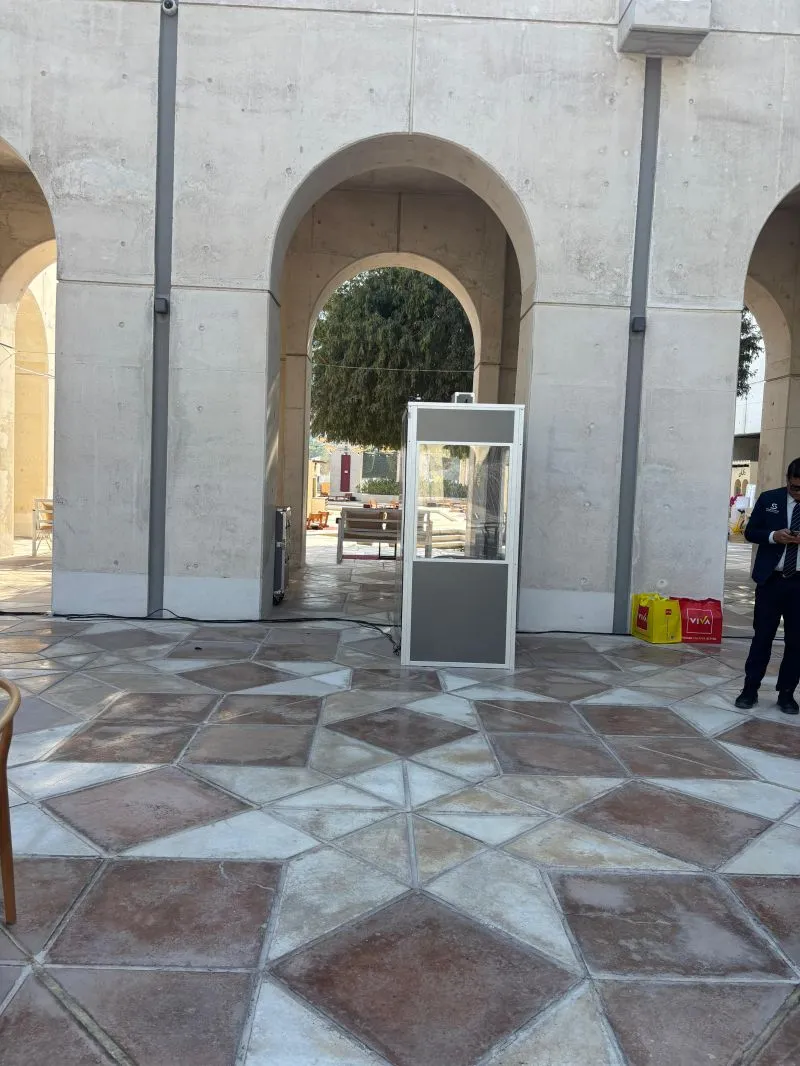
A single interpretation booth standing in an arched stone courtyard in Abu Dhabi.
An interpretation booth in a heritage courtyard in Abu Dhabi for Ramadan poetry and literature evenings.

What matters most

Respect, community languages and separate halls

Religious and community events carry meaning beyond the words. Honorifics, set phrases and religious terms must be handled the way the community expects, and some terms should stay in Arabic rather than be translated at all. Audiences in the UAE often speak Urdu, Malayalam, Bengali, Tamil or Filipino at home, and many gatherings seat men and women in separate halls. Interpretation has to reach everyone, quietly, without disturbing the occasion.

Typical sessions

Where we work in this sector.

  • Lectures and Ramadan programmes

    Evening lectures and talks during Ramadan, given in Arabic to an audience that includes many South Asian residents.

  • Majlis-style gatherings

    Seated gatherings with a speaker and open discussion, where a guest scholar or community leader speaks in Arabic or English.

  • Community association events

    Annual meetings and celebrations of community associations, with speeches in Malayalam, Tamil, Urdu or Bengali and guests from other communities.

  • Interfaith and dialogue events

    Panels and dialogues that bring faith communities together, where speakers switch between Arabic and English.

  • Cultural and poetry evenings

    Literature and poetry evenings in heritage venues, where captions with the original Arabic text alongside are especially valued.

How we run it

From the first call to the last file.

  1. Agree terms with the organisers

    We sit down with the organisers to agree how honorifics, names of scholars and religious terms are rendered, and which terms should stay in Arabic in every channel.

  2. One feed, every hall

    We take the feed from the main hall's sound system, so attendees in a separate women's hall or overflow room hear the same interpretation from the same session.

  3. Quiet QR placement

    The QR goes on discreet table cards, the programme or a screen in each hall, and attendees use their own earbuds so the room stays quiet.

  4. Monitored with care

    Our team monitors every channel throughout from one position at the side, without disturbing the gathering.

  5. Recordings for the community

    Afterwards, the organisers receive recordings and transcripts per language, and subtitle files if the lecture is published as a video.

When to add a human interpreter

For Friday sermons, Quranic recitation, scripture study and any session where the precise religious meaning of a text matters, choose a Sim Trans human interpreter who knows the vocabulary and the tradition. Machine interpretation of sacred text is a sensitive matter for many communities, and the organisers should decide in advance what is interpreted and how. Pastoral or family matters discussed one-to-one also call for a human interpreter.

AI and Sim Trans interpreters together

Reaching every part of the community

A Ramadan lecture in Abu Dhabi or a community gathering in Sharjah often draws an audience that is Muslim but not Arabic-speaking: families from Pakistan, India, Bangladesh and the Philippines who have lived in the UAE for years. The speaker’s Arabic reaches some of them fully, some partly and some not at all. A community association event in Dubai may be the reverse: speeches in Malayalam or Tamil, with Arab and Western guests who would like to follow.

AI interpretation on attendees’ own phones suits these events because it adds no visible equipment. There are no booths, no receivers to hand out and collect, and no one moving between halls during a lecture.

An example from Sharjah

A community centre in Sharjah hosts a series of evening lectures during Ramadan. A visiting scholar speaks in Arabic in the main hall; women follow from a second hall with a screen.

  • Channels: Arabic captions for the original, plus Urdu, Malayalam, Bengali and English interpretation.
  • Glossary: the scholar’s name and title, the names of the Prophets with their customary honorifics, and terms such as zakat, iftar and taraweeh, kept in Arabic in every channel.
  • Separate halls: the QR on a table card in each hall; both halls join the same session from the main hall’s feed.
  • Recitation: the organisers decided in advance that quoted verses are given in Arabic only, and that the scholar would explain each verse in his own words, which is then interpreted.
  • Afterwards: recordings of each language channel for the centre’s archive, and transcripts per language for the community newsletter.

Captions with the original

Many attendees understand some Arabic and want to stay close to the speaker’s own words. Live captions show the interpretation in the attendee’s language, with “Show original” one tap away. At poetry and literature evenings, this lets a listener follow the meaning while still reading the original line.

Agreeing what is interpreted

Before any religious event, we ask the organisers three questions:

  1. Which parts of the programme should not be machine-interpreted at all?
  2. Which terms and names should stay in Arabic in every language?
  3. How should honorifics and set phrases be rendered?

The answers become the glossary. The decisions belong to the community, not to us.

Read further

For the communities most often present at these events, see our notes on Urdu interpretation and Malayalam interpretation. If you are unsure which languages to offer, read how many languages a Gulf audience needs.

Questions organisers ask

How does it work when men and women sit in separate halls?

The interpretation comes from the main hall's sound system, so attendees in every hall join the same session from a QR placed in their own hall. Nobody needs to cross between halls to hand out or collect equipment.

Can religious terms stay in Arabic in the other channels?

Yes. We agree a glossary with the organisers in advance, including which terms should stay in Arabic and how honorifics and set phrases are rendered. The glossary is then applied consistently, although machine interpretation can still make mistakes.

Is SIM.AI suitable for Quranic recitation?

We do not recommend machine interpretation of recitation or scripture study. For those sessions, a human interpreter who knows the texts is the respectful and accurate choice, and Sim Trans can provide one.

Will the interpretation disturb the gathering?

No. Attendees listen through their own earbuds or read captions on their phones. Our team works quietly from one position at the side of the room.

Planning an event?

Let’s talk about your event.

Tell us the venue, the date and the languages. We reply within 24 hours with a plan and a quote.

Call
+971 56 685 4225
Email
ai@sim-trans.com
Based in
Dubai and Abu Dhabi, serving the UAE and GCC