Education and universities

Interpretation and captions for universities and schools in the UAE

SIM.AI helps universities and schools in the UAE reach students, parents and visiting academics in their own language. Guest lectures, open days, graduation ceremonies and academic conferences can carry live interpretation and captions on the audience's own phones. Afterwards, the transcripts and subtitle files make each session easier to study and to share.

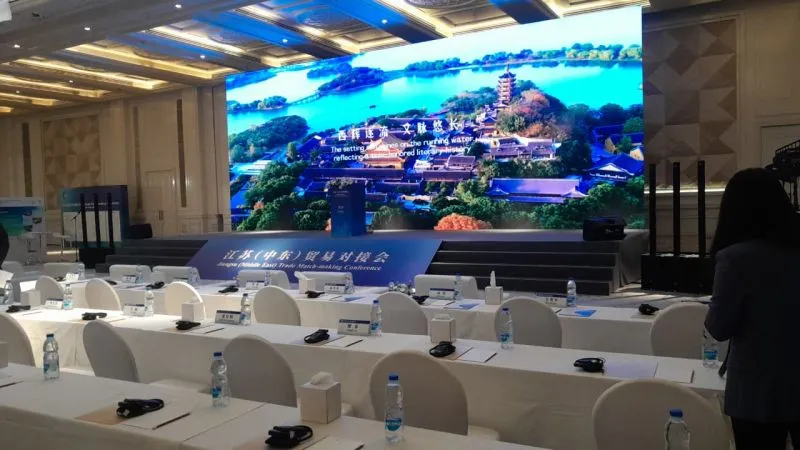
A conference room in classroom layout facing a wide LED screen, with name cards and microphones on each table.
A conference in Dubai in classroom layout, November 2025.

What matters most

Learning, access and two very different audiences

Education events speak to two groups at once. Students and academics need technical vocabulary rendered accurately enough to learn from. Parents and families need warmth and clarity, often in Arabic, Urdu, Hindi or Malayalam rather than the English of the lecture theatre. Captions matter for both: they help students following in a second language, and they help anyone who is hard of hearing.

Typical sessions

Where we work in this sector.

  • Guest lectures and public talks

    A visiting professor lectures in English or French to students who study in Arabic, with captions for those following in a second language.

  • Academic conferences

    Multi-day conferences hosted on campus, with panels that switch between Arabic and English and papers full of discipline-specific terms.

  • Open days and orientation

    Admissions and orientation talks for prospective students and their families, often the first contact a family has with the institution.

  • Parent evenings at schools

    School leadership addressing parents from many communities, where Urdu, Hindi, Malayalam, Filipino and Arabic channels make a real difference.

  • Graduation ceremonies

    Speeches from the chancellor and guests to graduates and families, in a hall too large for anyone to hand out receivers.

How we run it

From the first call to the last file.

  1. Collect the reading list

    We ask for slides, abstracts and a list of key terms from the faculty, and build a glossary for each lecture or conference track.

  2. Connect to the lecture theatre

    We take a feed from the lecture theatre's audio system or the auditorium desk, so the lectern microphone and the Q&A microphones reach every channel.

  3. QR on slides and seats

    The session QR goes on the first and last slide, the seat backs and the printed programme, so students can join before the lecture starts.

  4. Captions alongside audio

    We set up each session so students can listen, read captions, or both, and our team monitors every channel throughout.

  5. Study materials afterwards

    Faculty receive transcripts per language and subtitle files for the lecture recording, ready for the learning platform.

When to add a human interpreter

For examinations, disciplinary hearings, formal academic appeals or meetings with a family about a student's welfare, choose Sim Trans human interpreters. For a doctoral defence or a specialist symposium with dense terminology, consider a hybrid: human interpreters for the main language pair and SIM.AI for additional languages and captions.

AI and Sim Trans interpreters together

Two audiences, two plans

A university hosts two kinds of multilingual event, and they need different preparation.

The first is academic: lectures, symposia and conferences. Here the vocabulary is the challenge. A lecture in materials science or Islamic finance is full of terms that general machine interpretation may not know. The answer is preparation: slides, abstracts and a term list from the faculty, loaded into the glossary, and for the most technical sessions, Precision mode.

The second is community: open days, orientation, parent evenings and graduation. Here the vocabulary is simpler but the audience is broader. A school in Sharjah may have parents who speak Arabic, Urdu, Hindi, Malayalam, Filipino and English. Offering their languages tells families they are welcome.

An example from Abu Dhabi

A university in Abu Dhabi hosts a two-day academic conference on renewable energy, followed by a public evening lecture.

  • Conference sessions: English and Arabic presentations, with panels that switch between the two. Channels in Arabic, English, French and Mandarin for international delegates.
  • Glossary: speakers’ names and affiliations, project names, and around two hundred technical terms supplied by the organising faculty.
  • Public lecture: the same set-up, with the QR projected on the holding slide and captions on by default for students in the audience.
  • Afterwards: the faculty uploads the recordings with subtitle files to the university’s learning platform, and uses the transcripts to prepare the conference proceedings.

Captions as an access tool

Live captions help more people than those who need another language. They help students following a lecture in their second or third language, students who are hard of hearing, and anyone sitting at the back of a large hall. Every caption line can show the speaker’s original words with one tap, which suits language learners who want to check a term in the original.

What faculty and administrators receive

Deliverable Use on campus
Transcripts per language (.docx, .xlsx) Study notes, proceedings, accessibility support
Subtitle files Lecture recordings on the learning platform
Recordings per language Students who missed the session
Usage report Which languages students and families chose

See transcripts and records for the full detail of each format.

Read further

For French-speaking visiting faculty and North and West African students, see our notes on French interpretation. If you are new to the idea, start with what live AI interpretation is and how it differs from human interpretation.

Questions organisers ask

Can students use SIM.AI during a normal lecture?

Yes. A lecture with a microphone feeding the room's audio system can run as a session. Students scan the QR on the first slide and choose to listen, read captions, or both.

How do you handle specialised academic terms?

We build a glossary from the slides, abstracts and term lists the faculty sends, so subject terms are applied consistently. For very technical material, Precision mode enforces terminology and pronunciation. Errors are still possible with highly specialised terms, which is why we ask for the material in advance.

Do the transcripts work as lecture notes?

They are a useful study aid. You receive a written transcript per language in .docx and .xlsx, and standard subtitle files for the lecture recording. They are machine-generated, so faculty may want to review them before publishing.

Can parents join without installing anything?

Yes. Parents scan the QR code on their phone, choose their language from a list shown in each language's own script, and listen in their earbuds or read captions. There is no app and no account.

Planning an event?

Let’s talk about your event.

Tell us the venue, the date and the languages. We reply within 24 hours with a plan and a quote.

Call
+971 56 685 4225
Email
ai@sim-trans.com
Based in
Dubai and Abu Dhabi, serving the UAE and GCC