Inform an audience, never treat a patient
The clearest line in healthcare is between an event and an encounter. At an event, a speaker addresses a room: a congress plenary, a nursing workshop, a community talk on diabetes. If a term is misrendered, there is a speaker to ask, a slide to check and a colleague beside you. In a clinical encounter, a single patient acts on what they hear. That is where a certified human interpreter belongs, every time.
Within that line, there is a great deal SIM.AI can do. UAE hospitals and clinics employ staff from many countries, and community health messages need to reach residents in Arabic, Urdu, Hindi, Malayalam, Tamil, Filipino and more.
An example from Abu Dhabi
A three-day medical congress takes place at a hotel conference centre in Abu Dhabi, with a plenary hall, four parallel workshops and a patient-education afternoon.
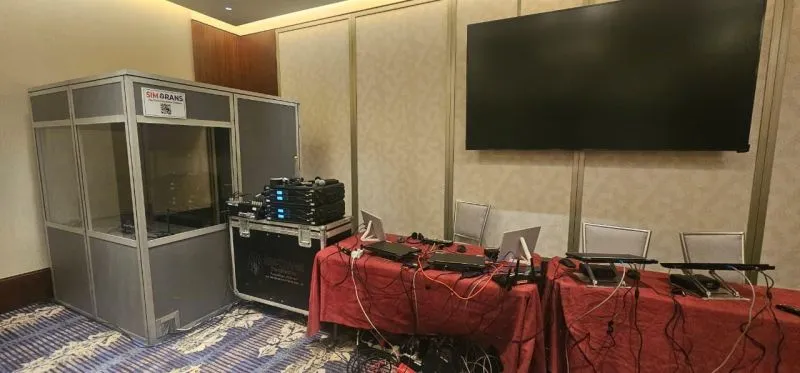
- Plenary: Sim Trans human interpreters in booths for Arabic and English, with SIM.AI adding Russian and Hindi from the same desk feed.
- Workshops: SIM.AI only, one session per room, with Arabic and English channels and captions for staff following in a second language.
- Patient-education afternoon: a talk on managing diabetes for community groups, with Urdu, Malayalam and Filipino channels added for the audience the organiser expects.
- Glossary: several hundred drug names, procedures and abbreviations from the scientific committee, run in Precision mode.
Speakers are briefed to say doses and figures clearly and to repeat critical numbers. Delegates can tap “Show original” on any caption line to see the speaker’s own words.
Numbers, names and units
The things machine interpretation most often gets wrong in medicine are the things that matter most: numbers, drug names and units. Three habits reduce the risk.
- Send the glossary early, including brand and generic drug names.
- Ask speakers to put critical figures on the slide as well as saying them.
- Treat the transcript as a working record, reviewed by a clinician before it is published.
What the organiser receives
- Recordings of every language channel, per session
- Transcripts per language in .docx and .xlsx
- Subtitle files for on-demand session videos
- A usage report showing languages used and listeners per language
Read further
Our checklist for choosing AI interpretation or human interpreters walks through the decision session by session. For a congress that combines both, see AI and human interpreters together. For community health talks, our notes on Urdu interpretation cover script and register for that audience.