When AI fits and when human interpreters matter
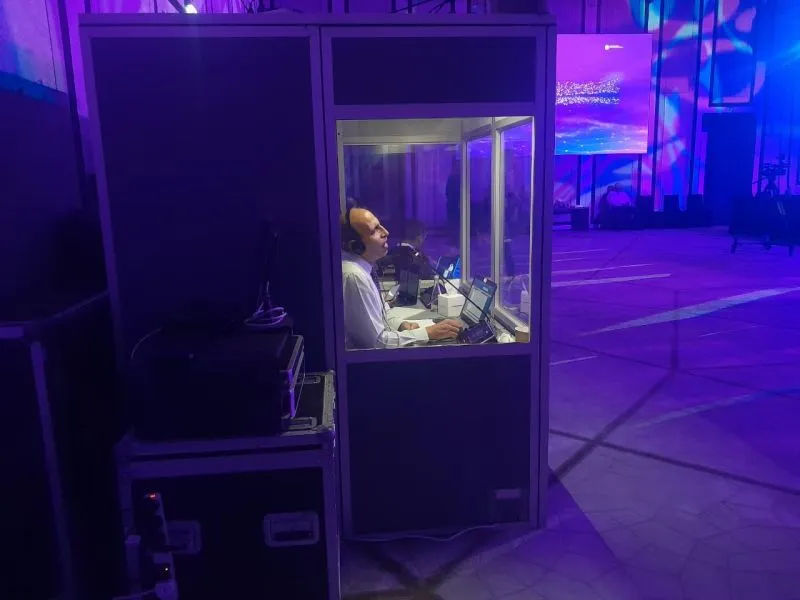
Choose certified human interpreters when a mistake would have legal, diplomatic or personal consequences: hearings, signings, negotiations, medical consent, and VIP sessions with strict protocol. Interpreters read tone, handle humour and idiom, and correct themselves in context.
Choose AI interpretation when the audience is wide and the content is informational: breakouts, stage programmes, training and town halls. It is a few seconds behind the speaker, can run up to 12 languages at once from one feed, and adds a language as a setting rather than a new booth. It can contain errors with names, heavy accents, poor audio and overlapping speakers, which a glossary reduces but does not remove.
Our comparison of AI vs human interpretation sets out the trade-offs in more detail.
Example hybrid set-ups
Main stage human, long tail on AI
At a two-day summit in Abu Dhabi, Sim Trans interpreters cover Arabic and English in booths on the main stage. Delegates who need Urdu, Russian, Mandarin and French follow the same plenary on their phones through AI channels.
VIP session human, breakouts AI
At a ministerial forum in Dubai, the closed VIP session has human simultaneous interpreters. Four afternoon breakouts run on AI interpretation, with no booths in those rooms.
Human audio, AI captions
At a university lecture series, a human interpreter provides Arabic audio, and guests can also read live captions on their phones, including deaf and hard of hearing guests who choose the speaker’s language. See live captions.
One team, one run sheet
Sim Trans already provides simultaneous interpretation in Dubai and consecutive interpretation with its own interpreters. Adding AI channels does not add a supplier: one point of contact, one glossary, one equipment plan and one person to call on the day. Interpreters in the booths can also use Interpreter Assist for live term support.
For a session-by-session way to decide, use our checklist for AI interpretation vs human interpreters. Hybrid set-ups are common for government and public sector events.