Government and public sector

Interpretation for government and public sector events in the UAE

SIM.AI suits ministry forums, authority briefings and public consultations where the audience speaks many languages and Arabic leads. Titles, initiative names and official terms are fixed in Precision mode before the session, and private sessions are PIN-protected. Where protocol demands it, Sim Trans adds certified human interpreters to the same plan.

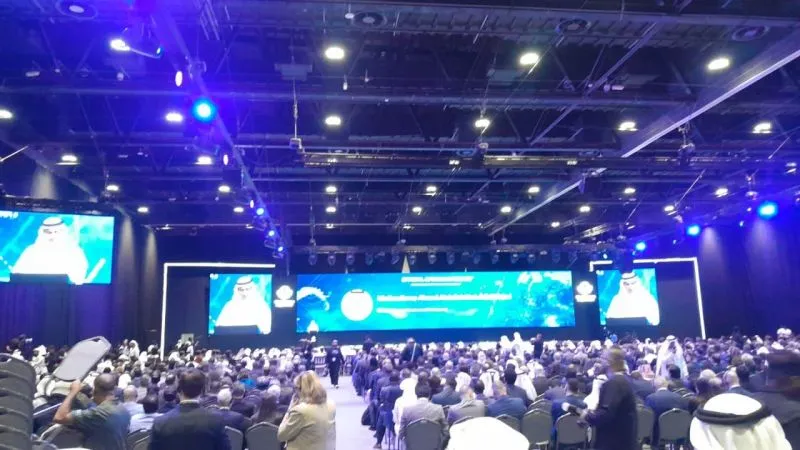
A packed conference hall in Abu Dhabi, delegates seated in long rows facing a stage with three large screens.
An international gathering in Abu Dhabi, January 2026. Sim Trans provided French, English and Arabic interpretation.

What matters most

Protocol, confidentiality and Arabic first

In government settings, the way a title is rendered is part of the message. A dignitary's honorific, the official name of a federal programme or a regulation number must come out correctly and consistently in every channel. Arabic is usually the language of the platform and the first channel listed. Many sessions are closed to the public, so access control and what happens to recordings afterwards matter as much as the interpretation itself.

Typical sessions

Where we work in this sector.

  • Public consultations and town halls

    An authority explains a new service or regulation to residents and businesses in Arabic and English, with South Asian and Filipino community languages added.

  • Ministry forums and launches

    Policy forums and strategy launches with international guests, where official initiative names must be rendered exactly as published.

  • Inter-agency and international workshops

    Working sessions with visiting delegations, run in a ministry meeting room with delegate microphones.

  • Staff briefings and training

    Internal sessions for a multilingual workforce, held as private PIN-protected sessions.

  • Open days and community outreach

    Police, municipality and civil defence outreach events speaking to residents in their own languages.

How we run it

From the first call to the last file.

  1. Protocol and glossary review

    We collect the order of precedence, every title and honorific, and the official names of programmes and entities, and load them into Precision mode for enforced terminology and pronunciation.

  2. Access and data agreed in writing

    We agree whether the session is private, who receives the PIN, how long recordings are kept, and whether processing should run in the UAE rather than the EU region.

  3. Audio from the venue system

    On the day we connect to the venue's own sound system or delegate microphone desk, with Arabic set as the first channel on the attendee page.

  4. Monitored throughout

    Our team watches every language channel live from one position at the side of the room, and the organiser never touches the system.

  5. Records and deletion

    You receive recordings and transcripts per language for the official record, and we delete them from our side on the date you set.

When to add a human interpreter

For bilateral meetings, speeches by senior leadership, signing ceremonies and any session where VIP protocol leaves no room for error, choose certified Sim Trans human interpreters. A common pattern is human interpreters for the principal speeches and the Arabic-English pair, with SIM.AI carrying the additional community languages and the breakout sessions.

AI and Sim Trans interpreters together

Why government events need a different plan

A government event usually has three audiences at once. There are the officials on the platform, the invited guests in the front rows, and the wider public or workforce the message is meant for. Each has different needs. The officials care about protocol and confidentiality. The guests may be an international delegation. The wider audience in the UAE speaks Arabic and English, but also Urdu, Hindi, Malayalam, Bengali, Filipino and more.

Precision mode is the starting point for this sector. It takes the glossary further: names, titles and official terms are enforced, and pronunciation is fixed, so an initiative name that took months to agree is not paraphrased on the day.

An example from Dubai

Consider a public consultation held by an authority in a Dubai auditorium. The director general opens in Arabic, a technical team presents in English, and residents ask questions from the floor.

  • Channels: Arabic, English, Urdu, Hindi, Malayalam and Filipino from one audio feed.
  • Access: an open session for residents, with the QR on the registration desk, the seat backs and the holding slide.
  • Glossary: the service’s official name in Arabic and English, the names of the platform’s features, and every speaker’s title.
  • Afterwards: transcripts per language go to the communications team for the published summary, and the usage report shows which communities attended.

A closed briefing for a visiting delegation the next morning runs differently: a private PIN-protected session, a shorter retention period, and a human interpreter for the Arabic-English exchange between principals.

What gets agreed before the event

Question Why it matters
Who receives the PIN? Controls who can join a closed session
Where is data processed? EU region by default; UAE on request
How long are recordings kept? Retention is your decision; deletion on request
Which speeches go to human interpreters? Protocol and VIP sessions where every word matters

Our security and privacy page explains each of these controls in more detail.

What you receive

Recordings of every language channel, transcripts per language in .docx and .xlsx for minutes and the official record, subtitle files for any published video, and a usage report. Machine transcripts are working records, not certified translations. Where a document must be certified, Sim Trans provides certified translation as a separate service.

Read further

Our article on interpretation for government events in the UAE covers protocol, seating and booth placement in more depth. For the Arabic side of the plan, including dialects and register, see Arabic interpretation.

Questions organisers ask

Can the data be processed in the UAE?

Yes. Data is processed in the EU region by default today, and UAE processing is available on request. Tell us at the start of planning so it can be set up before the session.

How do you make sure titles and honorifics are correct?

We build the glossary from your protocol office's list of titles, names and entities, and run the session in Precision mode, which enforces terminology and pronunciation. It reduces errors but does not remove them, which is why principal speeches are often given to human interpreters.

Can a session be closed to the public?

Yes. Private sessions are PIN-protected, so only invited guests can join, and you decide how long recordings are kept. We delete them on request.

Will Arabic appear first for guests?

Yes. We set the attendee page so Arabic is listed first, with every other language shown in its own script.

Can the same team provide human interpreters and equipment?

Yes. Sim Trans provides certified human interpreters, booths and receivers as well as SIM.AI, so one team plans and runs the whole event.

Planning an event?

Let’s talk about your event.

Tell us the venue, the date and the languages. We reply within 24 hours with a plan and a quote.

Call
+971 56 685 4225
Email
ai@sim-trans.com
Based in
Dubai and Abu Dhabi, serving the UAE and GCC